Global reliable toilet paper manufacturer & wet tissue supplier with over 15 years OEM&ODM experience



Which type of tissue is safer to use as toilet paper?
2024-11-20
In life, the common paper for daily use include facial tissue, toilet paper, wet wipes, kitchen paper, etc. Each of them has different uses and cannot replace each other. If used incorrectly, it may even seriously affect your health.
Paper towels are life assistants when used correctly, but health killers when used incorrectly!
In this article, let's learn about toilet paper.
There are generally two types of toilet paper: ordinary roll toilet paper (with core and without core), and wet toilet paper.
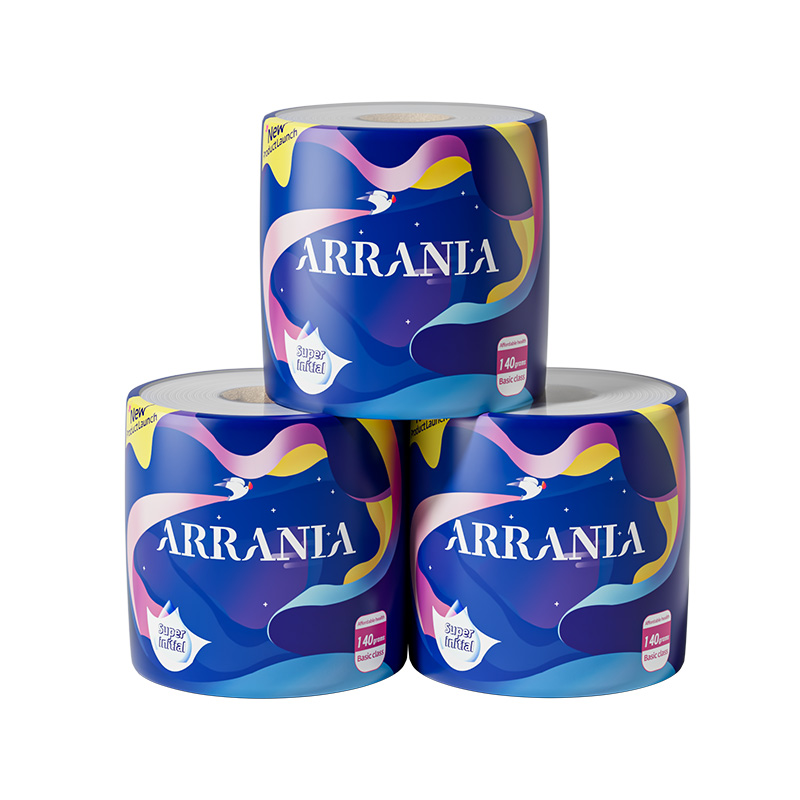
1. Toilet paper
Toilet paper is moderately soft and is mainly used when going to the toilet.
Qualified toilet paper will not cause harm to the human body. Although the hygiene standard is not as high as that of facial tissue, it is abundant and cheap.
Important tips:
First, toilet paper cannot be used as tissue paper. Toilet paper is more suitable for wiping after defecation, and cannot be used for other parts of the body such as the face and hands, let alone wiping the corners of the mouth and eyes.
There are three reasons:
First, the production raw materials are different. Toilet paper is made of recycled paper or virgin pulp, and tissue paper such as pumping paper is made of virgin pulp. Pumping paper can only use virgin pulp, while toilet paper can use virgin pulp and recycled paper. Since recycled paper is cheaper, most businesses use recycled paper as raw material. These raw materials are used in advance, thrown into the trash can and then into the garbage station, and then recycled and soaked to make pulp again, then de-oiled, de-inked and bleached, and then talcum powder, fluorescent agent, brightener, softener, and then dried, rolled, cut and packaged. It seems not very hygienic.
Second, the hygiene standards are different. The hygiene standards of toilet paper are lower than those of tissue paper, so it is not suitable for other parts of the body such as the face and hands. Tissue paper is more hygienic than toilet paper. The total colony count of tissue paper must be less than 200cgu/g, while the total colony count of toilet paper only needs to be less than 600cfu/g.
The third is the added chemical reagents are different. According to national standards, toilet paper such as roll paper can reasonably add some fluorescent agents and other substances, as long as it does not exceed the standard and the amount added does not cause harm to the human body. However, tissue paper such as tissue paper and handkerchief paper generally directly contacts the human body's mouth, nose and face skin, and it is not allowed to add fluorescent agents and recycled materials. Relatively speaking, it is healthier. In addition, toilet paper inevitably contains or remains some harmful substances to the human body, such as lead, cadmium, mercury, asbestos and other harmful substances.
In general, the country's testing standards for tissue paper are higher, the raw materials of tissue paper are purer than toilet paper, and fewer chemicals are added when making tissue paper, so the total colony count of tissue paper is lower than that of toilet paper.
Second, it is not suitable to use tissue paper as toilet paper. If you use tissue paper as toilet paper, it sounds very luxurious and looks very hygienic, but it is not suitable because tissue paper is not easy to decompose and can easily clog the toilet. There is another testing standard for paper products, "wet toughness", that is, toughness in a wet state. Toilet paper cannot have wet toughness. It must break when it is soaked, otherwise it will not meet the standards. Therefore, it is okay to flush toilet paper into the toilet. It will not cause the toilet to be clogged when it is discarded. And tissue paper is required to have sufficient toughness even in a wet state because it is used to wipe the face and hands, so as not to wipe the body with paper scraps. Because tissue paper is tough, it is not easy to decompose when thrown into the toilet, and it is easy to clog the toilet. Many public toilets remind: Do not throw used paper into the toilet, just to prevent people from throwing tissue paper into the toilet. Therefore, the national quality standard requires higher wet toughness strength for tissue paper such as tissue paper than toilet paper. It is not easy to be broken by water after contacting water. It is more suitable for wiping the skin of the human mouth, nose and face, while toilet paper is more suitable for wiping after defecation.
2. Wet toilet paper
Ordinary toilet paper is dry, and due to the special structure of the chrysanthemum, wiping the buttocks with ordinary methods cannot be wiped clean. The effect of wet toilet paper is much better. It can significantly improve the quality of life and is very cheap. Women in the uterine period need wet toilet paper. It can effectively clean the menstrual blood clots stuck to the skin without destroying the acidic environment that protects the vulva (the ingredients of wet toilet paper are relatively simple, most of which are very straightforward, just water. For example, use soapy water or wet wipes and other alkaline materials to clean , it will destroy the acidic environment that protects the vulva). For hemorrhoid patients, wet toilet paper is perfect. There is news that wiping your butt with wet toilet paper can prevent or treat hemorrhoids. For the elderly and children, their excrement may stick to the skin. Wet toilet paper is a very convenient choice, which can treat local skin in a timely manner. Of course, pay attention to choosing wet toilet paper with thick and flexible paper. Because wet toilet paper contains water, it can easily break if the fibers of the paper are not strong and tough enough. From this point of view, the texture of wet toilet paper made of non-woven fabrics is stronger, while the wet toilet paper made of dry-laid paper is closer to the toilet paper we know every day, and it is easier to tear or break.
Please note that wet wipes cannot be used as wet toilet paper!
Wet toilet paper and wet wipes look very similar on the surface, but in fact, they are very different from wet wipes. Wet wipes cannot be used as wet toilet paper.
There are three differences:
First, the ingredients are different. Most wet wipes contain alcohol, which has a bactericidal function, but is irritating and is not very suitable for cleaning the anus and private parts; the ingredients in wet toilet paper are simpler, most of which are very direct, just water, without adding alcohol, so it is safer and less irritating. However, many brands will add a variety of raw materials, such as benzalkonium chloride with bactericidal effect, glycerin with skin care effect, and chamomile, tea tree, aloe vera essence, etc.
Second, the uses are different. Wet wipes are mainly used to wipe hands, mouths, and body parts, while wet toilet paper is mainly used to clean private parts such as the anus and private parts. The skin in these parts is more sensitive and fragile and easily irritated. Therefore, relatively speaking, wet toilet paper is softer than wet wipes.
Third, the degradable properties are different. The basic raw materials of wet toilet paper include virgin wood pulp, cotton fiber and other plant fibers. Plant fibers themselves can be degraded and can be directly flushed into the toilet without worrying about clogging. Wet wipes use synthetic fiber materials, which are not easy to flush, so they cannot be thrown directly into the toilet after use.
ReviewsNumber of comments: {{ page.total }}
I want to comment?
{{item.nickname ? (item.nickname.slice(0, 2) + '*****') : item.source === 1 ? 'mall buyer' : '--'}}
{{item.comment_time}}
Review in the {{item.country}}
Reviews
Merchant
{{replyItem.nickname ? (replyItem.nickname.slice(0, 2) + '*****') : replyItem.source === 1 ? 'mall buyer' : '--'}}
{{replyItem.parent_nickname ? (replyItem.parent_nickname.slice(0, 2) + '*****') : '--'}}
{{replyItem.is_merchant_reply === 1 ? replyItem.reply_time : replyItem.comment_time}}
Review in the {{replyItem.country}}
Reviews

No customer reviews
recommended for you
Get in touch with us
Zibo Langqiao Biotechnology Co., Ltd. is an enterprise focusing on the export of high-end household paper. We are a professional toilet paper bulk manufacturer of disposable adult diapers, under pads, sanitary napkins, and pet urine pads, etc.
QUICK LINKS
PRODUCTS
CONTACT US
Email: lynn@cnlangqiao.cn
Phone: +86 19862230536
Phone: +86 19862230536
WhatsApp: +86 19862230536
Address: Room 1406, Zhongde Building, No. 222, Renmin West Road, Zhangdian District, Zibo City, Shandong Province, China
Address: Room 1406, Zhongde Building, No. 222, Renmin West Road, Zhangdian District, Zibo City, Shandong Province, China
social media
Copyright © 2026 Zibo Langqiao Biotechnology Co., Ltd. - www.langqiaohygiene.com |Sitemap