Global reliable toilet paper manufacturer & wet tissue supplier with over 15 years OEM&ODM experience



From Forest to Roll: A Comprehensive Guide to Sourcing Raw Materials for Toilet Paper Production
2025-10-29
In the competitive tissue paper market, the quality of the final product is fundamentally determined at the very beginning: the selection of raw materials. The choice of pulp directly influences the softness, strength, absorbency, and environmental footprint of the toilet paper. A strategic and informed approach to sourcing raw materials is not just a procurement decision—it's a cornerstone of brand reputation and customer satisfaction.
As your guide in global tissue trade, we provide a clear overview of the primary raw materials used in toilet paper manufacturing, empowering you to make the best choice for your product line and target market.
Why Raw Material Selection is a Strategic Decision
The core material of toilet paper is pulp, derived from plant fibers. The type of pulp used creates a critical balance between three key factors:
Product Quality & Sensory Experience: The length and treatment of fibers determine the tactile experience—softness, bulk, and strength—that consumers immediately notice.
Cost-Efficiency & Supply Stability: Raw material costs constitute a significant portion of the final product price. Sourcing decisions must balance quality with cost and ensure a stable, reliable supply chain.
Environmental Impact & Market Access: With growing global emphasis on sustainability, the eco-profile of your raw materials can be a major market advantage or a barrier to entry, influencing consumer choice and compliance with regional regulations.
The Core Raw Materials: A Breakdown of Your Options
Understanding the characteristics of different pulp types is essential for targeted production.
1. Virgin Wood Pulp: The Benchmark for Performance
Virgin pulp, derived directly from trees, is the traditional benchmark for quality and is categorized by the wood type:
Hardwood Pulp (e.g., Eucalyptus, Birch):

Characteristics: Short, fine fibers.
Advantages: Creates a very soft, smooth surface and gives the paper a dense, compact feel. Excellent for premium, multi-ply products.
Considerations: Generally offers less inherent strength than softwood pulp.
Softwood Pulp (e.g., Pine, Fir):
Characteristics: Long, strong fibers.
Advantages: Provides high tensile and tear strength, which is crucial for the durability of the paper, especially in single-ply or commercial grades.
Considerations: Can feel rougher than hardwood pulp.
Most premium toilet papers use a blend of hardwood and softwood pulps to achieve the perfect balance of softness and strength.
2. Recycled Pulp: The Pillar of Sustainability
Recycled pulp is made from post-consumer waste paper, such as old corrugated containers (OCC) and mixed office paper.
Characteristics: Fibers are shorter and weaker due to the recycling process.
Advantages:
Environmental Champion: Significantly reduces deforestation, water usage, and energy consumption.
Cost-Effective: Typically less expensive than virgin pulp.
Market Appeal: Carries strong eco-friendly credentials valued by a growing segment of consumers.
Considerations:
Requires extensive de-inking and cleaning processes.
The final product is often less soft and white than virgin pulp products.
May not be perceived as a premium product in some markets.
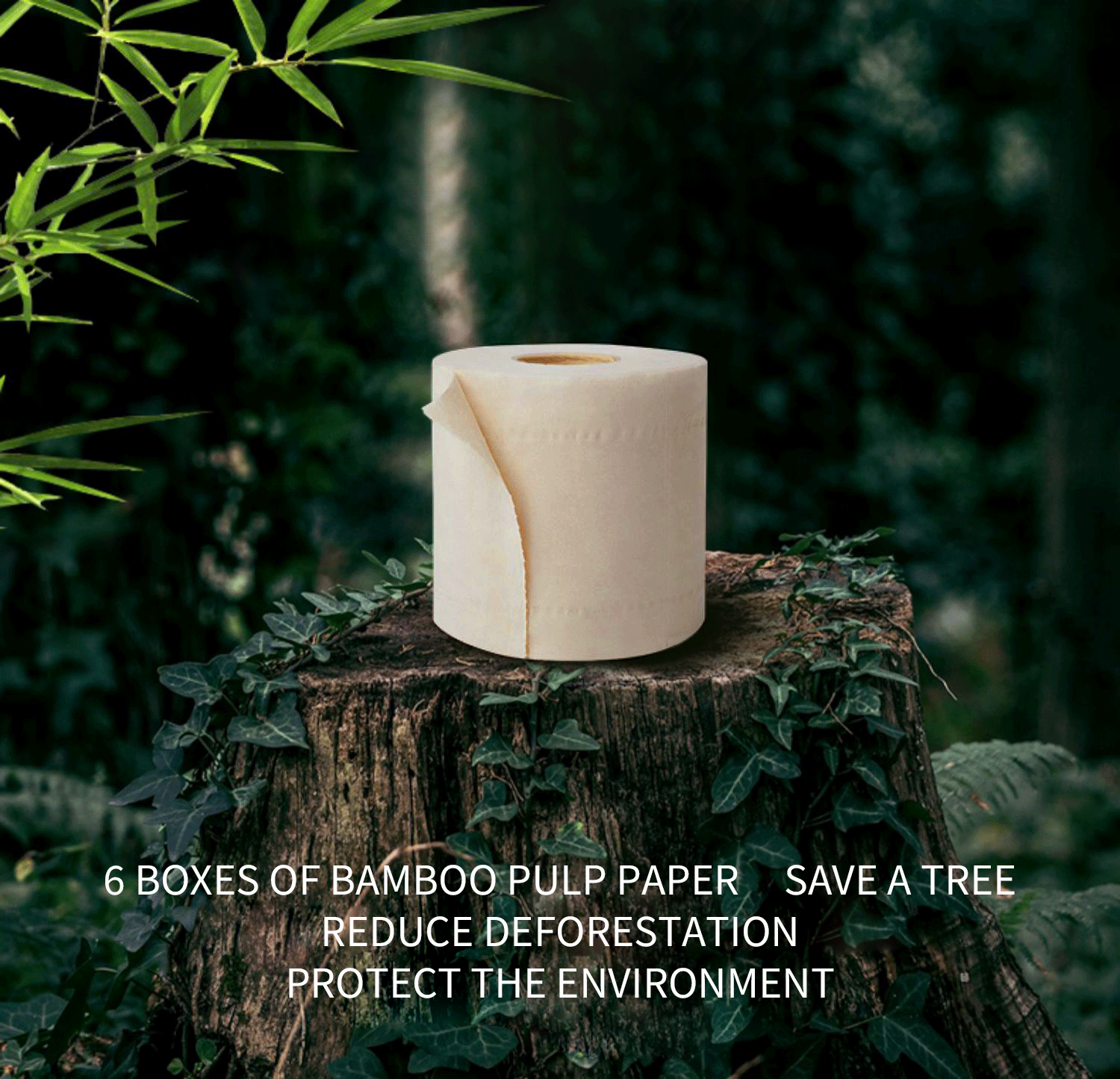
Bamboo Pulp:
Advantages: Bamboo is a fast-growing, highly renewable grass that requires no pesticides. The resulting pulp is naturally soft, strong, and has inherent antibacterial properties.
Making the Right Choice: Aligning Material with Market
Your choice of raw material should be a direct reflection of your business strategy:
For the Premium Market: A blend of virgin hardwood and softwood pulps is the standard for delivering superior softness and strength.
For the Eco-Conscious Market: 100% Recycled Pulp or Bamboo Pulp provides a compelling, verifiable environmental story.
For the Cost-Sensitive Market: A product with a high content of Recycled Pulp offers the best balance of performance and price.
ReviewsNumber of comments: {{ page.total }}
I want to comment?
{{item.nickname ? (item.nickname.slice(0, 2) + '*****') : item.source === 1 ? 'mall buyer' : '--'}}
{{item.comment_time}}
Review in the {{item.country}}
Reviews
Merchant
{{replyItem.nickname ? (replyItem.nickname.slice(0, 2) + '*****') : replyItem.source === 1 ? 'mall buyer' : '--'}}
{{replyItem.parent_nickname ? (replyItem.parent_nickname.slice(0, 2) + '*****') : '--'}}
{{replyItem.is_merchant_reply === 1 ? replyItem.reply_time : replyItem.comment_time}}
Review in the {{replyItem.country}}
Reviews

No customer reviews
recommended for you
Get in touch with us
Zibo Langqiao Biotechnology Co., Ltd. is an enterprise focusing on the export of high-end household paper. We are a professional toilet paper bulk manufacturer of disposable adult diapers, under pads, sanitary napkins, and pet urine pads, etc.
QUICK LINKS
PRODUCTS
CONTACT US
Email: lynn@cnlangqiao.cn
Phone: +86 19862230536
Phone: +86 19862230536
WhatsApp: +86 19862230536
Address: Room 1406, Zhongde Building, No. 222, Renmin West Road, Zhangdian District, Zibo City, Shandong Province, China
Address: Room 1406, Zhongde Building, No. 222, Renmin West Road, Zhangdian District, Zibo City, Shandong Province, China
social media
Copyright © 2026 Zibo Langqiao Biotechnology Co., Ltd. - www.langqiaohygiene.com |Sitemap